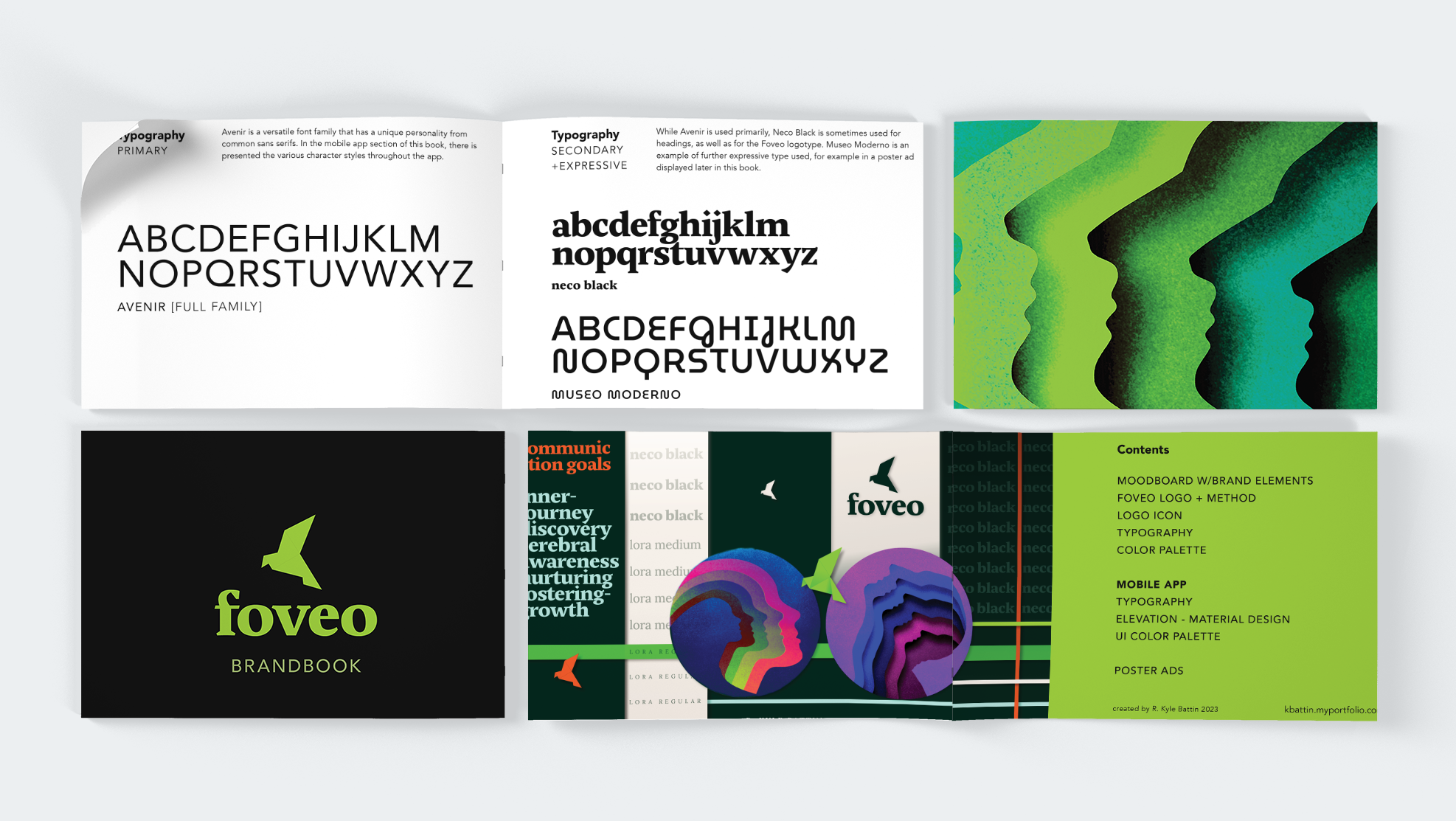
ABOUT FOVEO
Foveo is an app for development in critical thinking. To avoid the pitfalls of faulty thinking, Foveo teaches to recognize and refute logical fallacies and cognitive biases, moving toward more clear and effective thinking.
THE PROBLEM
In a world where propaganda is proving to be a powerful weapon of persuasion, critical thinking is vital to progress. Developing an eye for logical fallacies, helps us to identify when a claim is simply fallacious. Understanding our own cognitive biases, has many benefits—from better communication to greater self-awareness for growth, to improved mental health.
SOLUTION OVERVIEW
To have a successful solution I would need the app to not only be informative and educational, but also engaging for users to experience interactive learning. The app would need some kind of feedback to encourage progress. The app needs to pass usability heuristics and to be mindful of accessibility.
I needed to be able to inform the user of a lot of information, but I did not want to overwhelm. The Foveo app needed to be informative, digestible, and engaging.
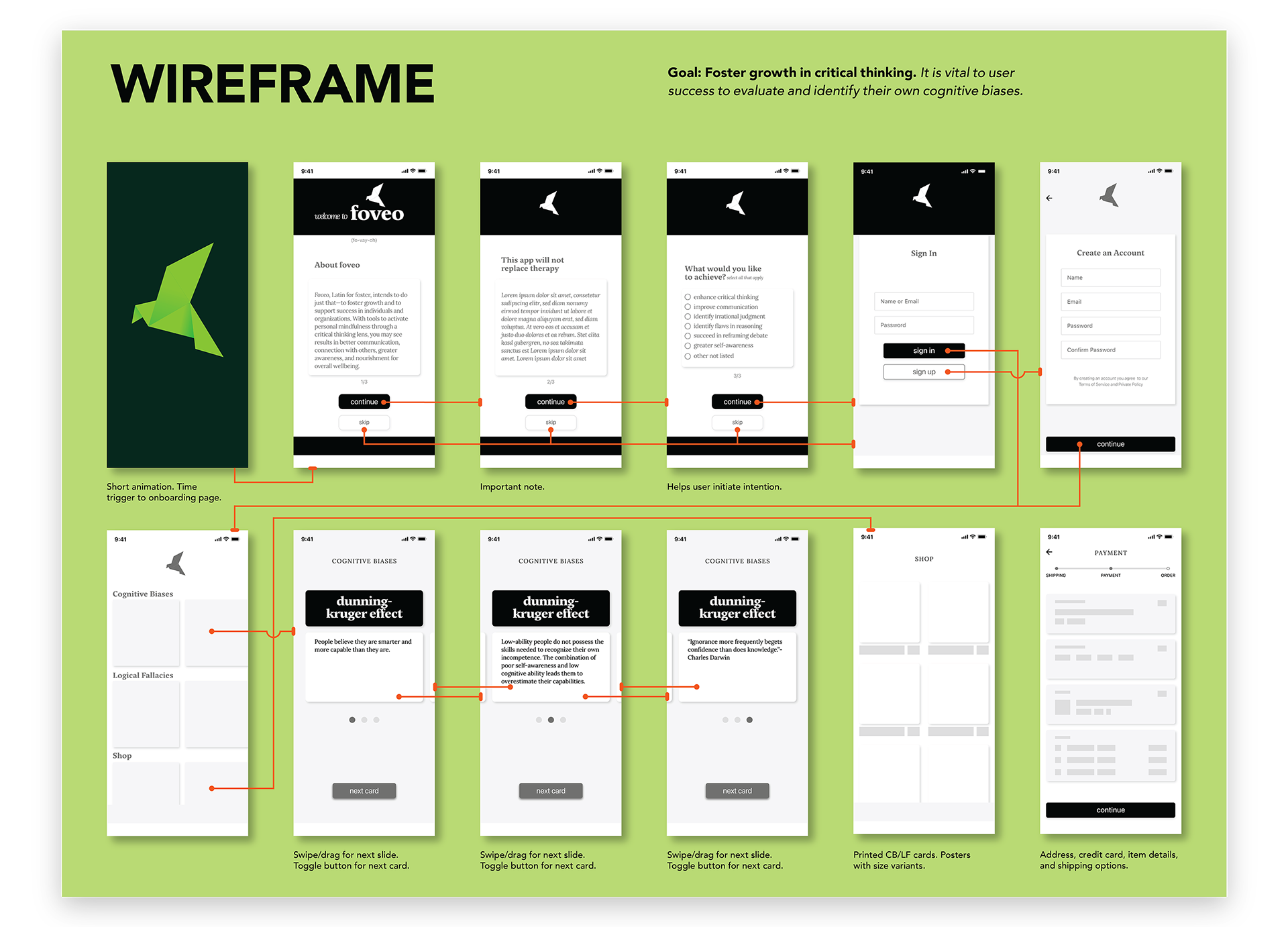
Initially, each fallacy/bias was broken down into parts to be swiped like a carousel—like flash cards (i.e., definition, explanation, and example). Usability testing suggested this solution created more obstacles to efficient readability and usability. Usability testing also highlighted the need for more developed gamification relating to the quiz flow.
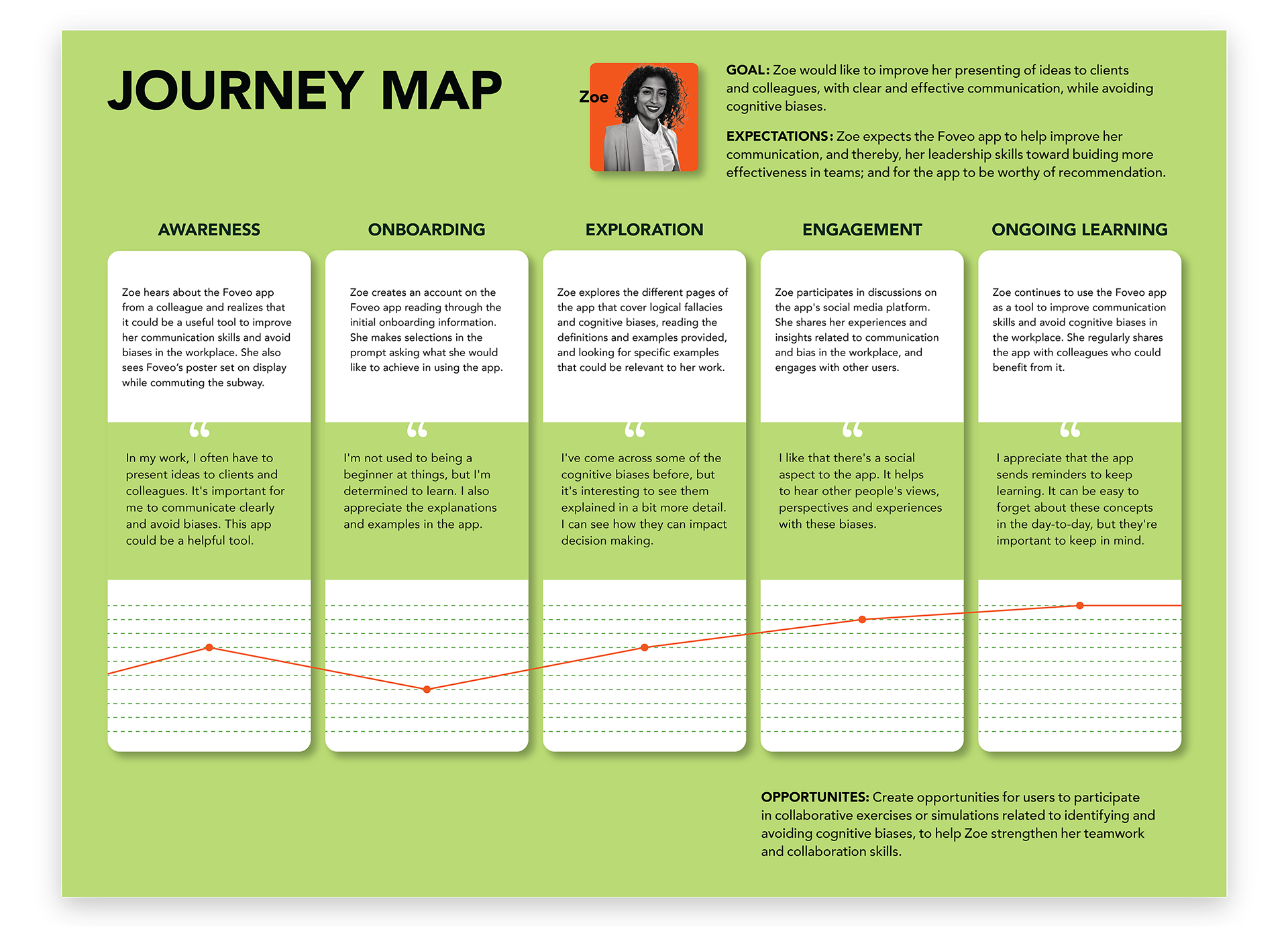
Initial usability testing suggested a need for more engagement. This initiated the community/social aspect of the app. Informal surveys suggested the social platform could engage users to find, analyze, and discuss real-world examples of fallacies/ biases in the media and elsewhere. This would also enhance user learning and confidence.
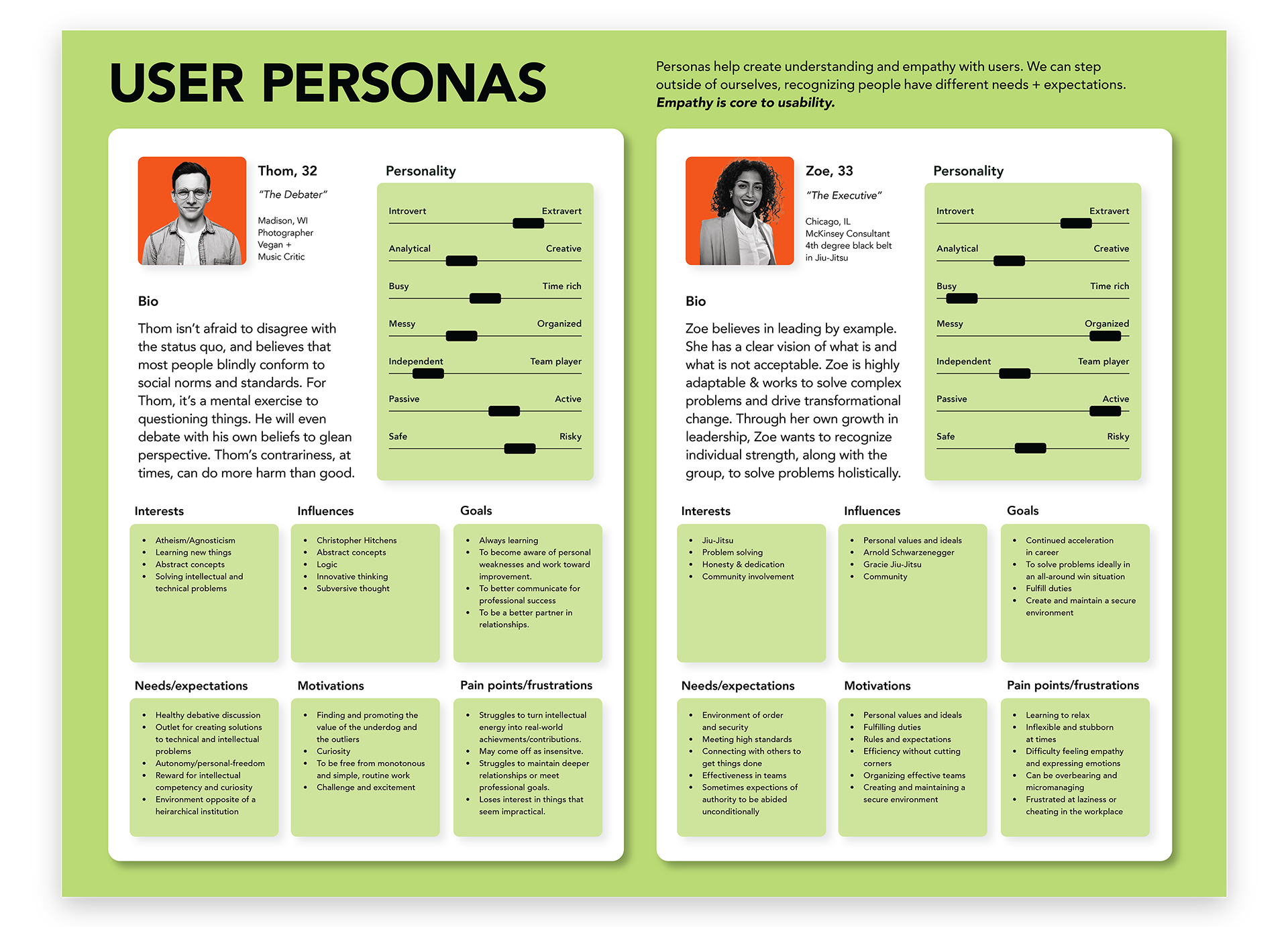
USER PERSONAS
Above, the user personas were created and studied for their needs and expectations, and their pain points and frustrations, among everything else. These were helpful models to understand and to empathize to move toward greater usability.
MAIN FEATURES
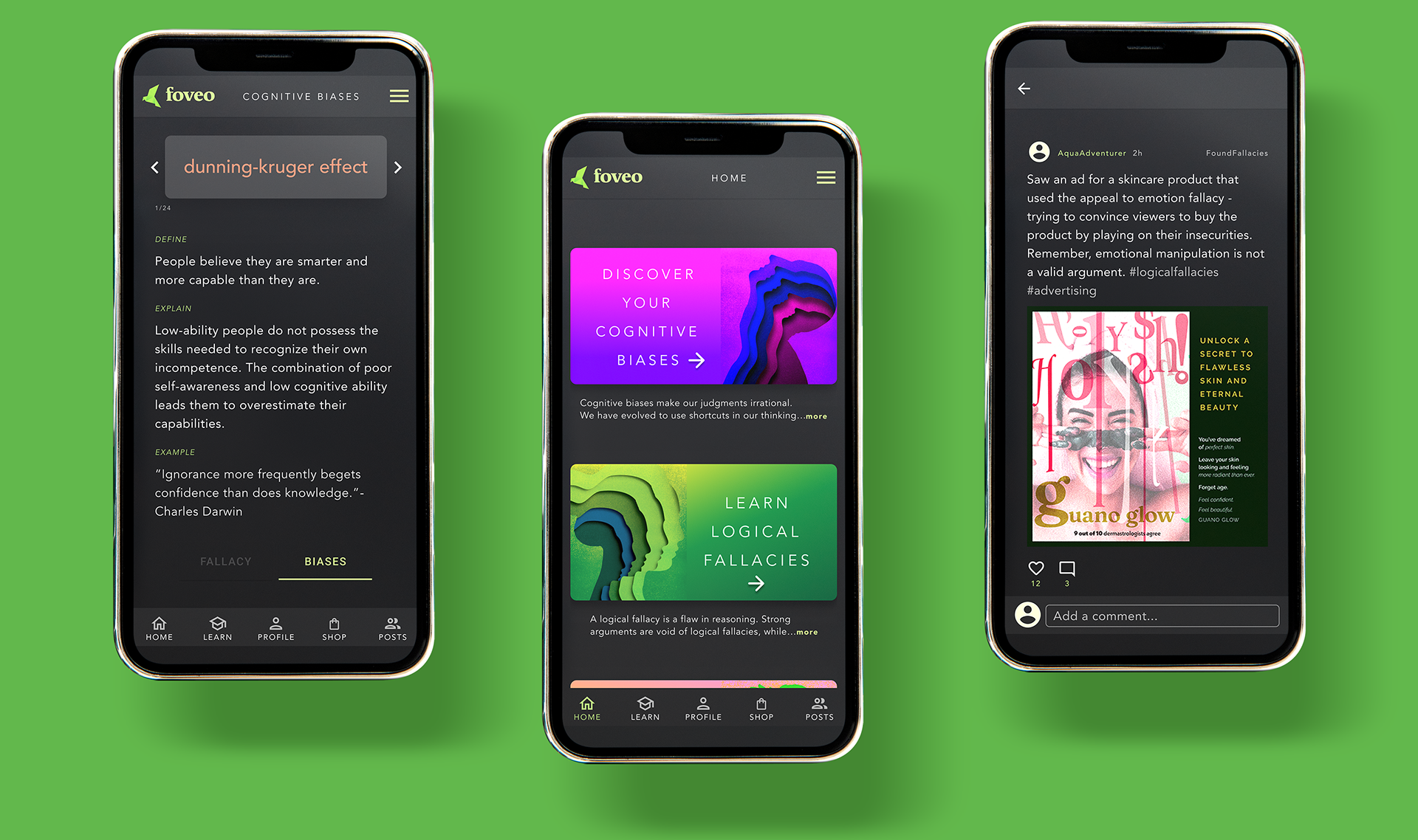
INFO: 24 logical fallacies and 24 cognitive biases are defined along with explanation and examples. Fallacies include the logical form (i.e., “Claim X assumes X is true. Therefore, claim X is true”).
QUIZ: A basic quiz format to aid in learning and comprehension.
SOCIAL MEDIA: Users can engage with each other in a social media format. Questions can be discussed. Found examples of fallacies may be posted for awareness and personal development.
SHOP: A conceptual shop with merch related to engaging and enhancing critical thinking.
RESOURCES: Users can find further engagement in their journey.
HIGH FIDELITY PROTOTYPE
Interact with the prototype developed in Figma.
Tips: Begin with FULL SCREEN. Press + drag in areas where you may generally use a swiping gesture (scroll functions as normal). Clicking off-subject reveals hot spot hints.
NEXT STEPS
The quiz needs more gamification (i.e., rewards/badges that unlock special features). The text-heavy sections need illustrations/visuals to correspond. Develop user profile, shop, and resources pages. Lastly, continue to find ways to encourage engagement in the social section.